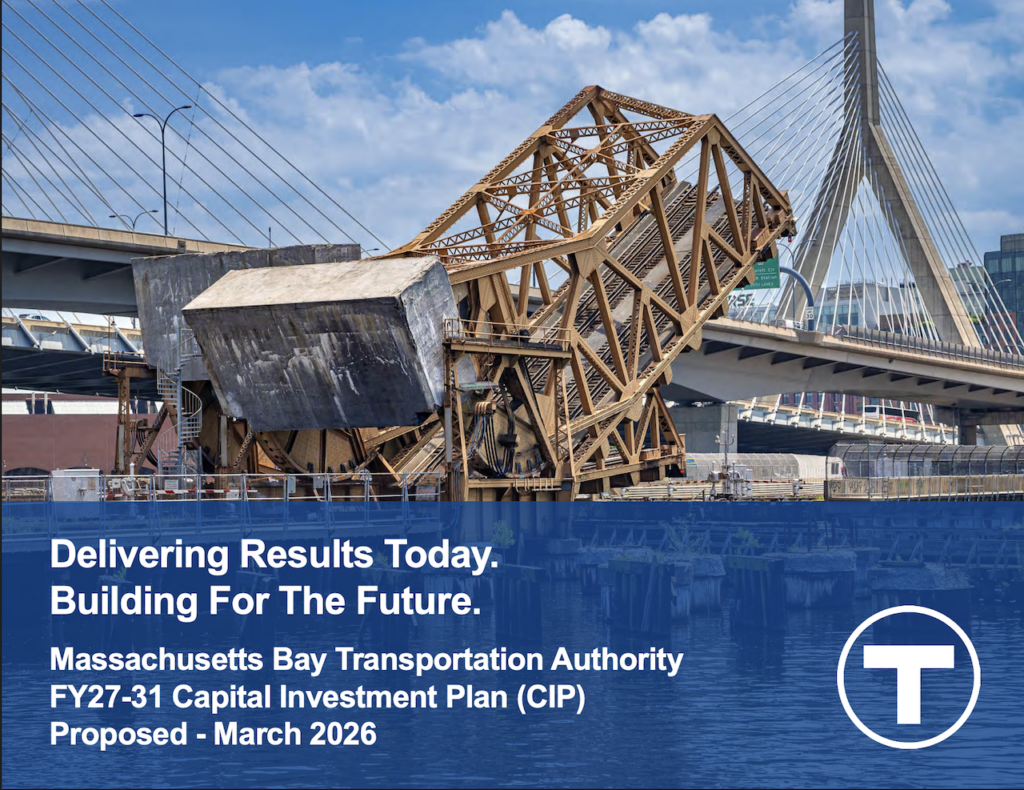
The CIP is a rolling, five-year financial plan that funds all MBTA capital projects, “seeking to deliver meaningful results for riders today while building a best-in-class transit system for the future,” according to the agency. Capital projects are investments or activities related to acquiring, renewing, constructing, improving, or maintaining a capital asset, including project planning and design. To support these goals, the capital projects in the proposed FY27-31 CIP focus on:
- “Regular Maintenance: Building on the MBTA’s recent progress to effectively and efficiently deliver results for our riders now and in the future.
- “Building for the Future: Tackling major modernization projects that set a strong foundation for future infrastructure while seeking additional funding.
- “Improving Service for our Riders: Ensuring improved service in the near- and long-term by improving frequency and reliability, decarbonizing the system, and improving the experience of riders.”
This proposed FY27-31 MBTA CIP (download below) includes more than 680 unique capital projects for a programmed spend of $10 billion over the next five fiscal years to “modernize, improve, and increase the safety and reliability of the MBTA.” These investments, the agency says, “aim to maintain a state of good repair, modernize MBTA assets, improve service, and meet strategic priorities and performance goals.” It is informed by the Capital Needs Assessment and Inventory, the MBTA Strategic Plan, and long-term plans such as Focus40, the Rail Modernization Plan, and Focus 2050, the Program for Mass Transportation (PMT) currently in development and also open to public comment now. Updated every five years, the PMT will bridge the MBTA Strategic Plan and the fiscally constrained CIP, “identifying investment priorities and potential capital improvements over 25 years through 2050.”
“Under the leadership of the Healey-Driscoll Administration and with the support of our Legislative and municipal partners, the MBTA continues to set a national example for how to accelerate transportation infrastructure projects that drive economic vitality supporting jobs, businesses, and communities,” said Interim Secretary of Transportation and MBTA General Manager and CEO Phillip Eng. “We are strategically planning to deliver capital projects that deliver meaningful benefits, improve service, and ensure safety to meet and exceed the needs of today and future generations. I invite all riders and community members to weigh in on the proposed Capital Investment Plan – your input is essential as we continue to build the MBTA in which we can all take pride.”